

The Problem with Money
Why the old foundation of value no longer serves a digital world
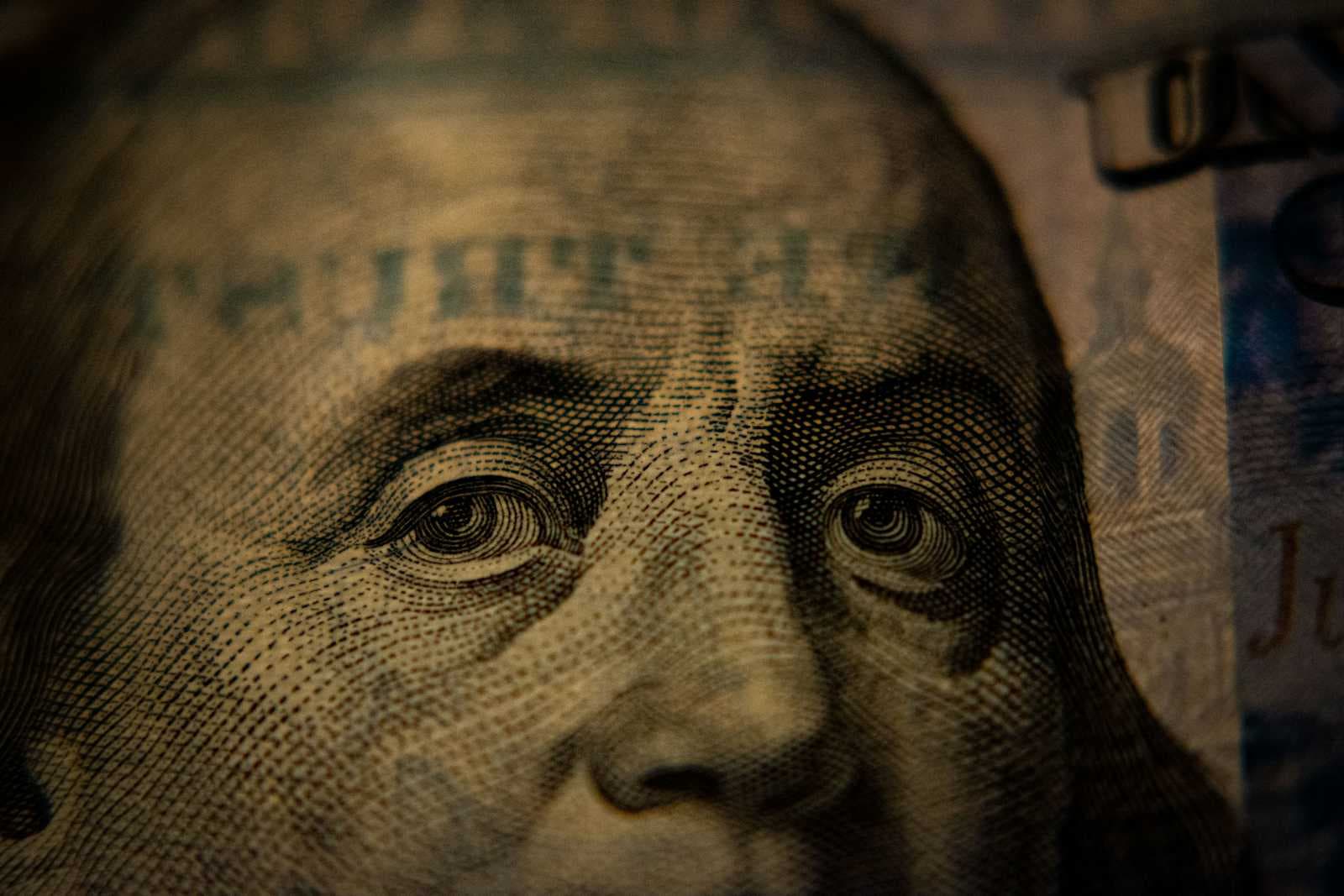
Exploring the unseen future of money. Developing PeerCash to restore privacy, freedom, and trust in human exchange.
From fragile cash to flawed Bitcoin, the search continues for a true peer-to-peer currency built for people, not institutions.
I remember the first time I held a banknote as a child. The paper felt important, almost magical. Adults said it had value, and so I believed.
Years later, I learned the truth: the note in my hand was not value itself, but a fragile promise. A promise that could be broken, devalued, or stolen at any moment.
For centuries, physical money has been both the backbone of human trade and the silent witness to its fragility. Coins and bills carry weight, not just in our pockets, but in the unseen costs they impose: inefficiency, vulnerability, and exclusion.
Consider the paradox. A slip of paper, printed by a central authority, has the power to buy bread, fuel an empire, or collapse under the pressures of inflation. A coin, once a promise of value, now drifts between utility and obsolescence. The entire system rests on trust in intermediaries—banks, governments, and regulators—whose goals often diverge from those of everyday people.
From a praxeological perspective, the problem becomes clearer: money is not a neutral tool, but a reflection of the actions and incentives of those who control it. When the structure of money rewards centralization, dependency, and hidden manipulation, it inevitably harms the individuals who rely on it most. Savings are eroded, opportunities are lost, and entire populations are left vulnerable to forces they neither chose nor benefit from.
These harms are not abstract. They manifest in very real limitations:
Fragility. Cash can be stolen, counterfeited, or destroyed. It requires physical presence, limiting its use in a digital-first world.
Exclusion. Billions of people remain unbanked or underbanked, left outside the flow of commerce because physical cash ties them to fragile local economies.
Opacity. While physical money seems private at first glance, its handling leaves trails—receipts, deposits, withdrawals—that funnel back into centralized institutions.
Inefficiency. Moving money across borders becomes costly and slow, bound by bureaucracy and gatekeepers.
The First Digital Experiment
Bitcoin was the first real attempt to break this cycle. It dared to imagine money without masters, a form of value not bound by governments or banks. For the first time, ordinary people could transact across borders without asking permission. It was revolutionary not only as technology but as an idea: money could be separated from the state.
Yet revolutions are rarely complete in their first act. In its current form, Bitcoin has inherited as many burdens as it has solved. It is slow, processing only a handful of transactions per second. It is energy-intensive, consuming resources on a scale that few can ignore. And it is incapable of everyday privacy, exposing transaction details on a public ledger visible to anyone with the time or incentive to analyze it.
The reality is that Bitcoin has been captured by forces it sought to transcend. Transaction fees climb when the network is congested, making small payments impractical. The dream of peer-to-peer exchange has been swallowed by layers of speculation and custodial services, where most users now hold “their” Bitcoin through third-party platforms rather than directly. What was meant to liberate individuals has, in practice, led many back into dependence.
This is not failure, but limitation. Bitcoin lit the torch, but it is not the torchbearer that will carry humanity into a future of truly free exchange. What we need is not simply a digital version of cash. We need a new kind of foundation, one that allows value to flow with the same immediacy, privacy, and trust as a face-to-face exchange, yet without the weaknesses of either coins or chains.
The Unseen Future
Imagine sending value as seamlessly as sending a message. No waiting days for settlement. No paying a toll to faceless intermediaries. No fear of your personal financial life being cataloged, tracked, or sold.
This is not science fiction. It is the logical next step. We already live in an age where information moves at the speed of light. Why should money be any different?
A system can exist where:
Transactions are private by default, yet verifiable through mathematics rather than oversight.
Transfers are instant, accompanied by real-time confirmations, not delayed promises.
Security is future-proofed, resilient not just against today’s threats but against the dawn of quantum computing.
Value can move directly between peers without fees, barriers, or permissions.
The building blocks for such a system already exist. Cryptography has given us zero-knowledge proofs, mathematical methods to prove something is true without revealing what it is. Federated messaging infrastructures, like the Matrix protocol, have shown that decentralized communication can scale beyond silos. Post-quantum cryptography is being developed to defend against the computing paradigms of tomorrow.
What is missing is the synthesis: a unification of these innovations into a system built for people, not institutions.
Toward a Living Currency
Physical money will one day be as archaic as the horse-drawn cart, an artifact of how far we’ve come. The challenge is not to replicate its form, but to capture its essence: immediacy, accessibility, and trust.
A future system must achieve what Bitcoin dreamed but could not complete: true peer-to-peer exchange, protected by mathematics, immune to surveillance, and accessible to anyone with a connection.
This is not about replacing governments or dismantling economies. It is about giving humanity a tool worthy of its century. A living currency that belongs to the people who use it, not to the institutions that control it.
The problem with physical money is not that it exists, but that it cannot evolve. The solution is not to cling to the old, nor to worship the imperfect digital experiments of the past. The solution is to build what comes next—together, openly, and with purpose.
The unseen future is waiting. It will not announce itself with fanfare. It will arrive quietly, like a message between friends, like value shared without permission, like trust encoded in mathematics.
And when it does, we may look back at our coins and bills not with nostalgia, but with gratitude. They carried us far enough to imagine something greater.